Today I’m excited to share my Edelweiss violin sheet music and practice tips!
Edelweiss is one of the most beloved songs from The Sound of Music, and the sweet, lyrical melody sounds great on the violin. I hope you’ll try it!
I’ve created two arrangements: an easy version in C Major, and an intermediate one in B flat Major. No matter what level you’re playing at, I have something for you!
Whether you’re learning this for a performance or just because you love The Sound of Music, you’ll find the sheet music, free warmups, and practice tips below.
Free Scale Warmups for Edelweiss from The Sound of Music
One of the best ways to warm up before practicing a song is to play the same scale as the key of the song you’re working on.
Below are the scales for both the easy sheet music and the intermediate arrangement. Be sure to download the scale that corresponds with the version you’d like to learn!
Beginner – C Major Scale Warmup

C Major Scales, Arpeggios
and a Bonus Exercise
Intermediate – B flat Major Scale Warmup

B♭ Major Scales, Arpeggios
and a Bonus Exercise
Edelweiss Violin Sheet Music (Easy and Intermediate Arrangements)
I’ve made two arrangements of Edelweiss: an easier version with tabs for players who are in the beginner stage, and a more challenging intermediate version that includes extra techniques like shifting and double stops. Take a look at both options and choose the one that best fits your current playing style.
Easy Sheet Music
First, take a listen to the beginner violin arrangement of Edelweiss:
- violin solo
- violin + piano accompaniment
- piano accompaniment

Easy Version – Violin Sheet Music
Edelweiss by Richard Rodgers
Intermediate Sheet Music
Listen to the intermediate version of Edelweiss for violin:
- violin solo
- violin + piano accompaniment
- piano accompaniment

Intermediate Version – Violin Sheet Music
Edelweiss by Richard Rodgers
Piano Accompaniment
Both versions of Edelweiss sound great with piano accompaniment. You can download the easy and intermediate versions (mp3) here:

Piano Accompaniment – Audio Recordings (.mp3)
Edelweiss by Richard Rodgers
Edelweiss by Richard Rodgers Violin Tutorial
Edelweiss comes from the classic musical The Sound of Music, with music by Richard Rodgers and lyrics by Oscar Hammerstein II. Although many people associate the melody with Austria because of the story, the song was actually written specifically for the musical and has become one of its most recognizable melodies.
Ready to try? Watch my video lessons below to hear the arrangements and practice along with me!
Beginner Tutorial
Intermediate Tutorial
If you enjoy my video lessons, be sure to subscribe over on Youtube – click the button to go to my channel!
Practice Tips for Playing Edelweiss on Violin
Now that you’ve downloaded your warmup and chosen which arrangement you’d like to learn, here are a few things to think about as you play.
1. Key Signatures
It’s always important to know what key signature you’re playing in.
Easy Sheet Music: C Major
The easy arrangement is in the key of C Major. This means that there are no sharps or flats in the key signature; every note is natural unless you encounter any accidentals.
Practicing the C Major scale before working through the piece will help you remember where exactly to place your fingers later.
Intermediate Sheet Music: B flat Major
The intermediate version is in the key of B flat Major, which contains two flats: B flat and E flat.
Before practicing Edelweiss, warm up with the B flat Major scale and arpeggio to train your fingers and your ear for the song.
B♭ Major Scales, Arpeggios
and a Bonus Exercise
2. Slurs and Smooth Phrasing
One of the most important aspects of Edelweiss is the smooth, lyrical quality. Both arrangements are full of slurs to help you create this sound naturally on the violin.
When playing slurred notes, try to keep your bow moving smoothly. Avoid any accidental accents on notes. Think of the entire slur as one phrase, or musical sentence, rather than three separate notes.
Listen carefully and keep your bow steady to achieve the singing quality you’re after!
3. Dynamics and Expressive Swells
Both arrangements include dynamics markings, and the intermediate arrangement has extra dynamic swells near the end of the piece.
A swell means to gradually get louder and then softer again within a phrase.
To create a swell on the violin, we want to use three important tools:
- Bow weight: add a little more arm weight to increase the volume and intensity.
- Bow speed: Move your arm faster: a faster bow creates more sound.
- Bow placement: Bring your bow slightly closer to the bridge for a louder, more concentrated sound.
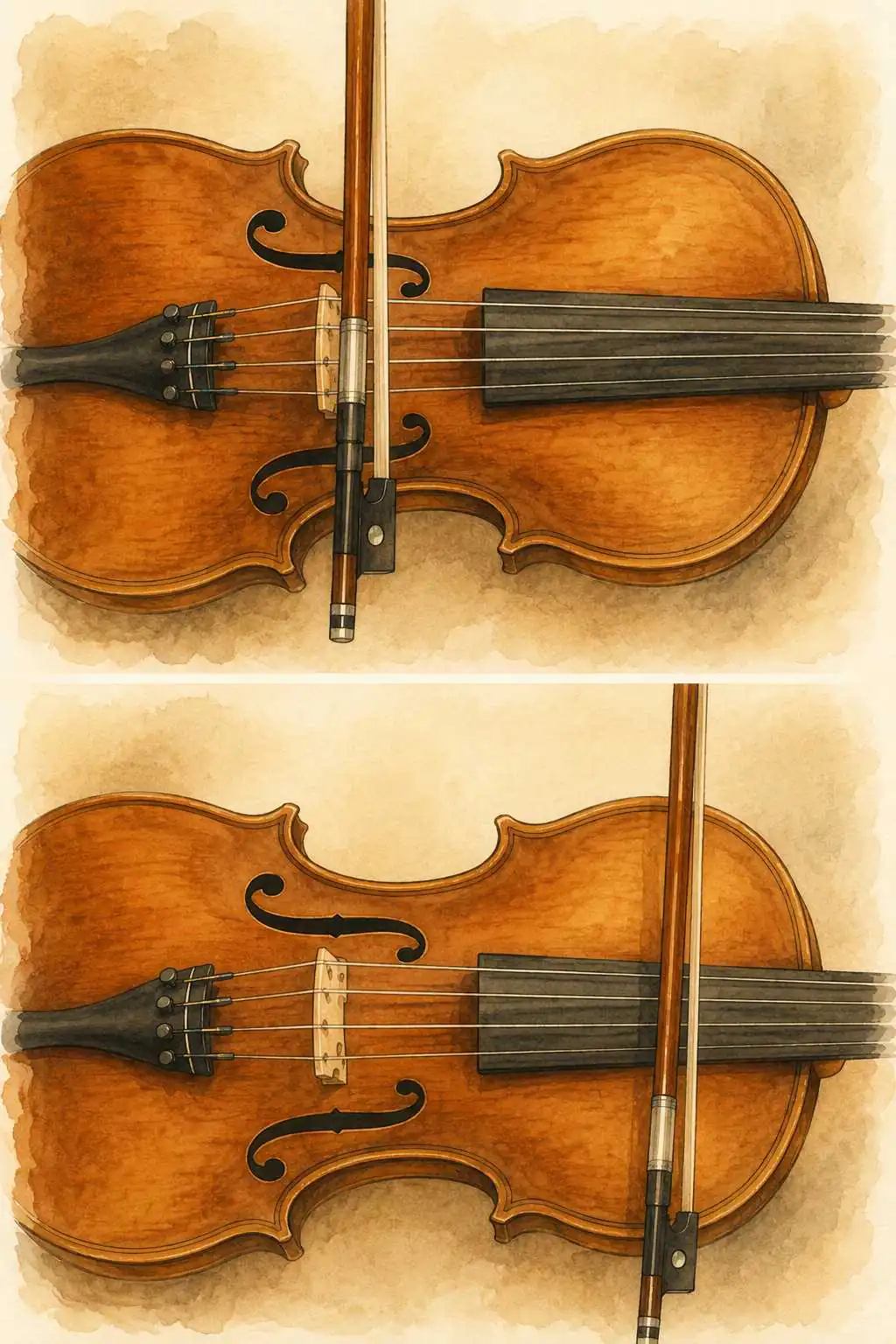
To gradually get quieter, reverse these tools, and you’ll create a beautiful swell!
Whether you’re playing the easier arrangement or the harder one, you can use the tools above to create beautiful, dramatic dynamics.
Free Violin Sheet Music in Your Inbox

Try the Edelweiss by Richard Rodgers Violin Sheet Music
I hope you enjoy learning this beautiful tune! Remember to download the free scale warmup and piano accompaniment to get started.
Looking for more music from movie musicals? Check out Colors of the Wind or City of Stars next!
Will you learn Edelweiss on the violin? Let me know in the comments!